

The Hidden Environmental Cost of Your Old Shoes
When you recycle old shoes, you’re tackling a major,, waste problem. Here are your main options for keeping worn-out footwear out of landfills:
Best Options for Recycling Old Shoes:
- Repair first – Extends life by years and reduces environmental impact by 20-30%
- Donate to charities – Give shoes a second life through local shelters and non-profits.
- Brand take-back programs – Look for collection bins at major footwear retailers.
- Specialized recycling – Use mail-in services for materials that can’t be donated.
- Local textile bins – Find community drop-off locations for textile recycling.
- Creative upcycling – Garden planters, art projects, pet toys
Each year, Americans discard at least 300 million pairs of shoes. Most end up in landfills, taking 30 to 40 years to decompose while releasing toxic chemicals and contributing to the 1.4% of global greenhouse gas emissions from the footwear industry.
Fortunately, sustainable options exist, from professional resoling and brand recycling programs to creative upcycling. The key is knowing which option works best for your shoes and understanding that the trash bin should always be your last resort.
I’m Eric Neuner, founder of NuShoe Inc. Since 1994, I’ve helped extend the life of over 5 million pairs of shoes through professional repair. My experience working with major footwear brands and individual customers has shown me that choosing to recycle old shoes through repair, donation, or proper recycling programs dramatically reduces waste and saves money.

Recycle old shoes terms simplified:
The Environmental Cost of Tossing Your Shoes
When you throw out old shoes, they begin a long, damaging journey. In the U.S. alone, we discard a staggering 300 million pairs of shoes every single year, with most heading straight to landfills.
A single pair of shoes can take a shocking 30 to 40 years to decompose. As they slowly break down, they leach harmful, toxic chemicals into the soil and groundwater, posing a risk to our environment.
Beyond landfill waste, the footwear industry contributes significantly to climate change, accounting for 1.4% of all global greenhouse gas emissions. Manufacturing just one pair of new sneakers can generate about 30 pounds of CO2 emissions—equivalent to leaving a 100-watt light bulb on for a week.
Why are shoes so problematic? It’s their complex mix of materials, designed for durability but not for easy breakdown:
- Leather: Often chemically treated, making it slow to decompose.
- Rubber: Used in soles, it’s built to last for ages in a landfill.
- Plastics: Found in uppers and midsoles, they can persist for centuries.
- Textiles: Synthetic materials like polyester and nylon don’t break down easily.
- Adhesives and Metals: Glues and small parts like eyelets add to the disposal challenge.
This complicated blend is why learning to recycle old shoes properly—or even better, to repair them—is so critical.

Understanding the footwear industry’s carbon footprint helps us make better decisions. Every step toward sustainability, from repair to proper recycling, is a step toward a healthier planet. For more insights, explore our articles on Environmental Impact.
Repair First: The Ultimate Sustainable Choice
Before you look for ways to recycle old shoes, consider the most powerful sustainable choice: repair. At NuShoe, we’ve spent over 30 years proving that repair is the ultimate green solution, far more impactful than even the best recycling programs.
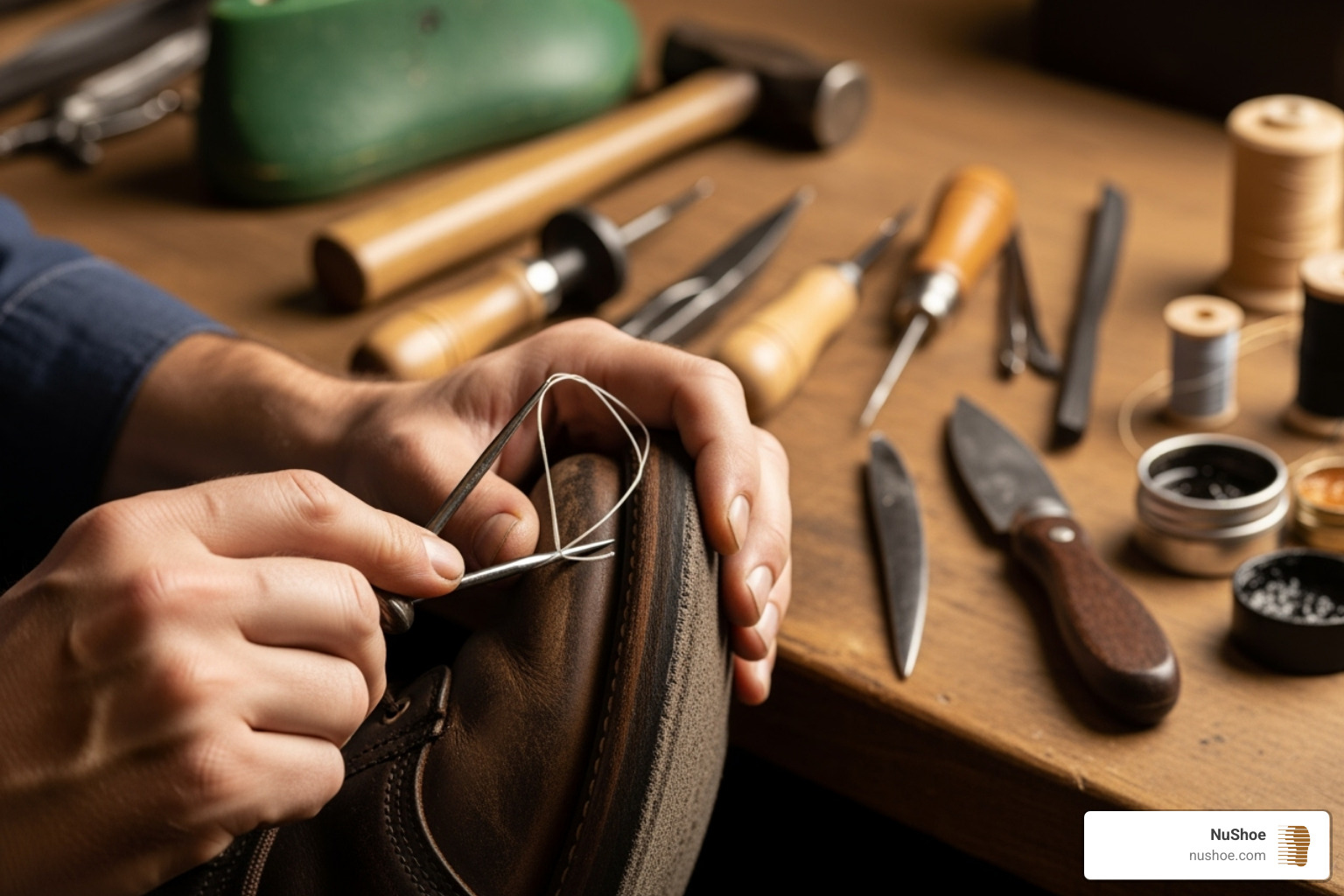
The greenest shoe is the one you already own. Since 1994, we’ve repaired over 5 million pairs, and our experience shows that most “worn-out” shoes just need expert attention to be revived. Repairing shoes keeps them out of landfills for years, sometimes decades, and it saves you money. Quality footwear is an investment, and repair almost always costs less than replacement.
Choosing repair also dramatically reduces your environmental impact. Extending a shoe’s life by just nine months can reduce its carbon footprint by 20-30% by eliminating the need for new manufacturing. Learn more in our guide, Why Repair Instead of Replace? The Sustainable Choice for Your Footwear.
Resoling is often the game-changer. A professional resole can add years to your footwear’s life, and we explain the process in The Art of Shoe Resoling: How to Save Money and the Environment.
We’re particularly proud of our brand-specific renewal services. We can refurbish the cork footbeds of your beloved Birkenstocks or resole and recondition your tough Dr. Martens boots, preserving their iconic look and durability. We also provide authorized repair for Mephisto, Merrell, Rockport, and many other brands.
So before you search for places to recycle old shoes, ask: Can this pair be saved? More often than not, the answer is yes.
How and Where to Recycle Old Shoes
When repair isn’t an option, it’s time to recycle old shoes properly. This contributes to the circular economy, keeping materials in use and out of landfills. Due to their complex mix of materials, shoes require specialized recycling programs. Fortunately, these programs are growing, making it easier to Reduce Waste.
For a comprehensive look, see our guide From Sneakers to Sustainability: Navigating Shoe Recycling Programs.

Preparing Your Shoes to be Recycled
A little prep work ensures your shoes are accepted. Always check the specific program’s guidelines first, but here are some general tips:
- Clean your shoes: Wipe off excess mud and dirt.
- Keep pairs together: Tie laces together or use a rubber band.
- Remove insoles: Some programs may ask you to remove heavily soiled insoles.
National Programs That Recycle Old Shoes
- Charitable Donations: Many nonprofits distribute gently used shoes to people in need and support micro-enterprise programs in developing countries. You can even organize a shoe drive through these types of organizations.
- Athletic Shoe Recycling: Some programs focus specifically on keeping athletic shoes out of landfills through initiatives for individuals, schools, and retailers.
- Brand Take-Back Programs: Many athletic brands accept worn-out athletic shoes of any brand at participating retail stores. The shoes are ground into material for playgrounds, tracks, and new products.
- Mail-In Recycling Services: For a guaranteed recycling solution, paid mail-in services are available. You can purchase a zero-waste box, fill it, and ship it back. It’s ideal for mixed collections.
Local Drop-Offs and Donation Centers
- Textile recycling bins: Look for textile recycling bins in community locations.
- Local running stores: Many collect old athletic shoes, often partnering with national programs. Call your local store to check.
- Community donation centers: Local charities and thrift stores often accept gently used, wearable shoes for resale or distribution.
Creative Alternatives: Donating and Upcycling
Beyond repair and specialized recycling, donating and upcycling offer creative, impactful alternatives. These options create social benefits and align with our commitment to Responsible Consumption.
Donation: Giving Shoes a Second Life
Donating gently used shoes is a powerful way to empower communities and reduce waste. If your shoes are still in good, wearable condition, they are perfect candidates for donation.
Some organizations use donated footwear to create sustainable economic opportunities. They provide shoes to entrepreneurs in developing countries who sell them, creating jobs and providing affordable footwear. This is a wonderful way to recycle old shoes for a greater good. You can even organize a shoe drive to maximize your impact. Remember to clean your shoes and tie them together before donating.
Upcycling: DIY Projects for Your Favorite Pairs
For shoes that are truly beyond repair or donation, upcycling transforms them into something new and useful. It’s a chance for your creativity to shine.
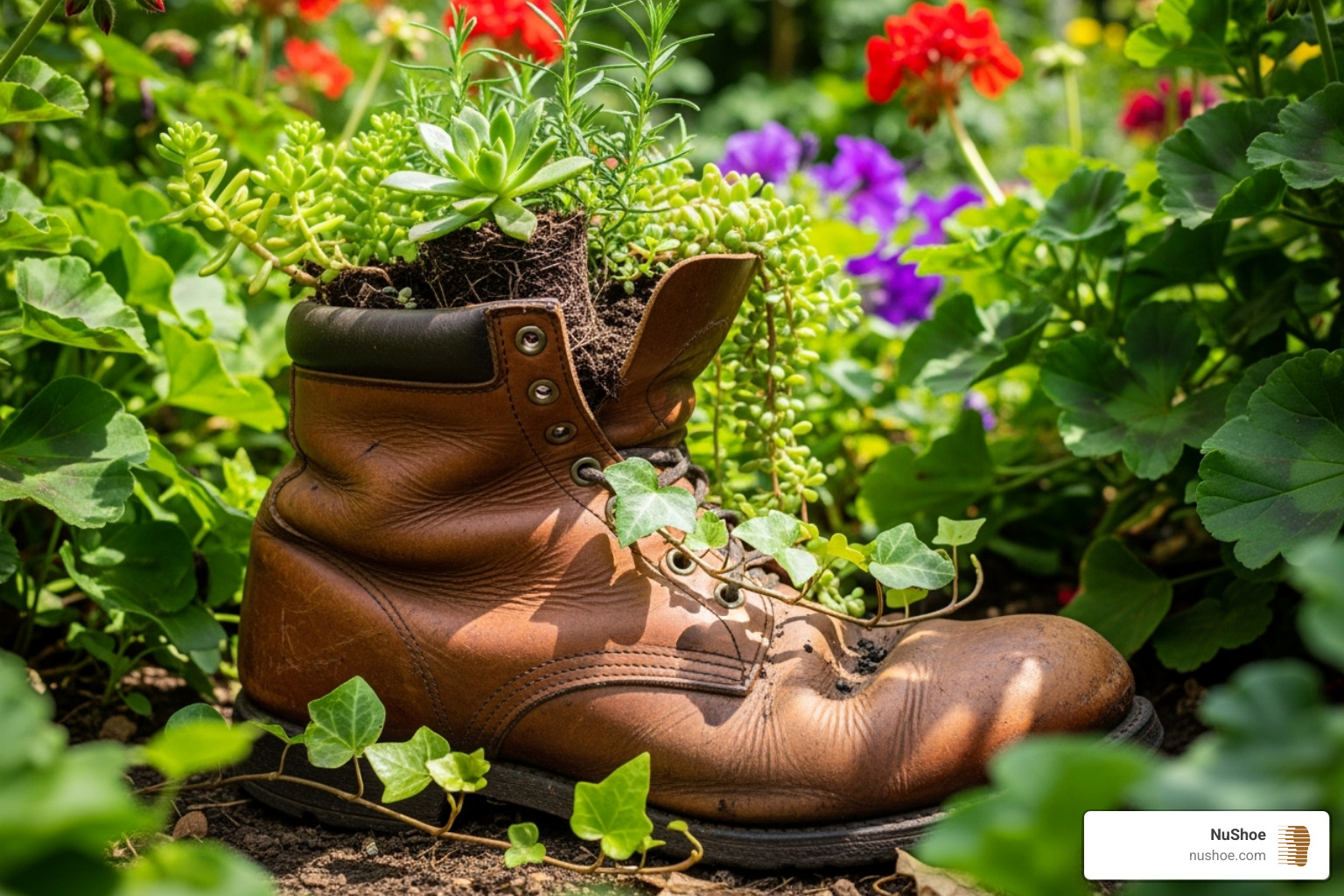
- Garden Planters: Turn old boots or sneakers into unique planters for small flowers or herbs.
- Pet Toys: Repurpose durable rubber soles or fabric into safe toys for your pets (ensure no choking hazards).
- Art Projects: Use the varied textures and colors of shoe components for mosaics, sculptures, or other art.
You can find countless ideas for upcycling projects online. Upcycling keeps waste out of landfills and gives your old shoes a memorable new life.
Frequently Asked Questions about Shoe Disposal
Here are answers to common questions about shoe disposal to help you make the best choices for your footwear and the planet.
What types of shoes can be recycled?
Many shoe types can be recycled, but it depends on the materials and the specific program. Athletic shoes and sneakers are often the easiest to recycle old shoes because their consistent materials (rubber, foam, textiles) are what specialized programs are designed to handle.
Boots can also be recycled, but materials like treated leather or metal components (steel toes, buckles) can complicate the process. Severely damaged shoes or those with complex materials may not be accepted. Always check the guidelines of your chosen recycling program.
What happens to shoes after they are recycled?
Recycled shoes are sorted and mechanically shredded to separate core materials like rubber, foam, and textiles. These are then processed into raw materials.
Reclaimed materials become valuable resources for new products. For example, recycled rubber is often used to create soft playgrounds and durable running tracks. These materials can also be incorporated into new shoes, flooring, or insulation. As a last resort, non-recyclable materials may be used in waste-to-energy processes, but the primary goal is to keep materials in the circular economy.
Can I put old shoes in my curbside recycling bin?
The answer is almost always no. Do not put old shoes in your curbside recycling bin.
- Different Systems: Curbside programs are not equipped for the specialized processing that shoes and textiles require.
- Contamination Risk: Shoes can jam machinery and contaminate other recyclables, like paper and plastic.
- Specialized Programs Needed: Use the dedicated programs we’ve highlighted, which have the right infrastructure.
Putting shoes in your curbside bin creates more problems than it solves. Instead, choose repair, donation, or a specialized recycling program. When in doubt, check with your local waste management service.
Conclusion
At NuShoe, we believe your best shoes are worth caring for, not discarding at the first sign of wear. For nearly three decades, we’ve shown that to recycle old shoes means giving them new life, not just throwing them away.
The sustainability hierarchy we’ve outlined is a practical roadmap:
- Repair First: This is the most impactful choice. By restoring boots or resoling shoes, we prevent landfill waste and avoid the carbon footprint of new manufacturing. We’ve restored over 5 million pairs since 1994, proving that most shoes can be saved.
- Donate Next: When repair isn’t an option, donation gives gently worn shoes a second life, creating jobs or helping those in need.
- Upcycle Creatively: Transform old boots into garden planters or sneakers into art, giving them a meaningful new purpose.
- Recycle as a Final Step: Specialized recycling programs are the responsible safety net for shoes at the very end of their life.
The 300 million pairs of shoes landfilled annually in the U.S. represent missed opportunities. Each pair could have followed a more sustainable path.
At NuShoe, sustainability is in our DNA. When you choose to Extend the Life of Your Shoes and Sustain the Planet with us, you’re joining a movement that values craftsmanship and environmental responsibility. We’re modeling what the Circular Economy looks like in action.
The next time you look at a worn pair of shoes, your choice matters. Together, we can ensure that to recycle old shoes means giving them new purpose, not creating new problems.