

Understanding Quick Heel Lining Deterioration
If you’ve noticed the inside heel of shoe wearing out quickly, you’re likely frustrated. This common issue can turn comfortable shoes into blister-making machines.
Here’s a quick look at why this happens:
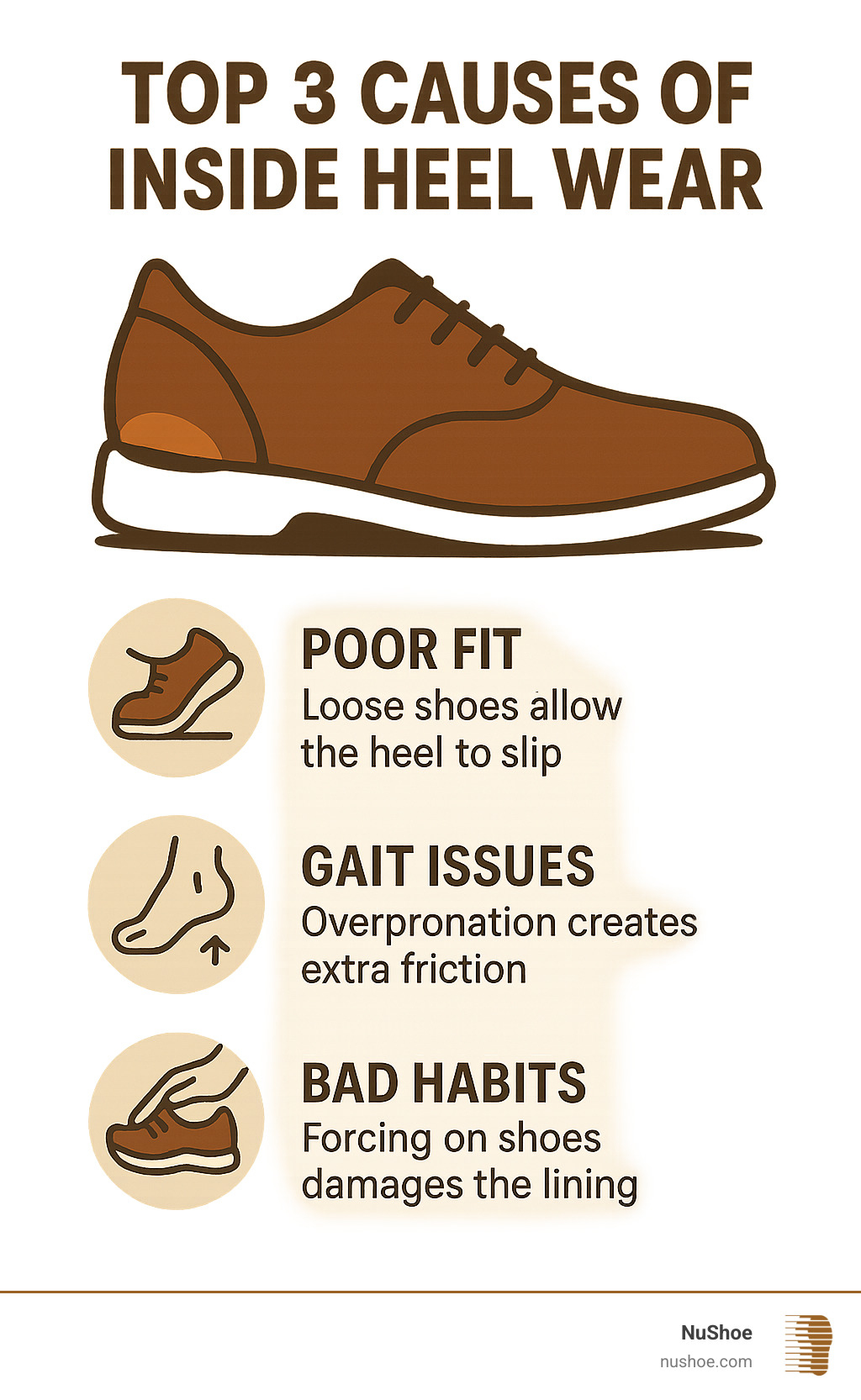
- Poor Shoe Fit: If your shoes are too loose, your heel will slide and rub, causing friction.
- Gait Issues: Your unique walking or running style (like overpronation) can put extra stress on the heel lining.
- Bad Habits: Not unlacing your shoes fully when putting them on or taking them off forces your heel against the lining, causing damage.
- Sock Choice: Wearing socks made of certain materials, like cotton, can increase friction and accelerate wear.
This problem often comes down to friction, wear and tear, and the delicate heel counter of your footwear. Understanding the root causes is the first step to making your shoes last longer.
I’m Eric Neuner, founder of NuShoe Inc. For nearly three decades, my work in shoe repair, especially with the inside heel of shoe wearing out quickly, has given me deep insights into prevention and lasting solutions.
Why the Inside Heel of Your Shoe is Wearing Out Quickly
It’s a common frustration: your favorite shoes are barely broken in, and already the inside heel of shoe wearing out quickly. This isn’t bad luck; several factors contribute to this premature wear. The main culprit is friction. Constant rubbing from your heel wears away the fabric and foam, eventually creating a hole. This problem is often exacerbated by the shoe’s materials, your foot shape, and your gait.
Your Shoe Fit, Laces, and Socks are the First Clue
Often, the reason the inside heel of shoe wearing out quickly is simple.
Improper Fit: If shoes are too big, your heel slides with each step. If they’re too small, your heel is crammed against the lining. Both cause friction. For a proper fit, try on shoes in the afternoon when your feet are slightly larger.
Heel Movement and Lacing: A loose heel is a primary cause of wear. This can be due to the shoe’s design or how you tie your laces. Lacing techniques that lock your heel in place, which we’ll cover later, are crucial for reducing friction.
Sock Material: Your socks matter. Cotton socks retain moisture and can pill, increasing friction. We recommend moisture-wicking merino wool or synthetic socks, which create a smoother surface for your heel.
Your Habits Might Be the Problem
Our daily habits can put significant stress on the heel of our shoes.
Forcing Feet into Shoes: Slipping shoes on without untying them or kicking them off forces your heel against the back, damaging the fabric and the supportive heel counter. This is a major reason the inside heel of shoe wearing out quickly.
Not Un-Lacing: Take a few seconds to fully untie your shoes. This allows your foot to slide in and out smoothly, reducing strain on the heel lining.
Using a Shoehorn: A shoehorn is a smart tool that protects your shoe’s heel. It guides your foot in, preventing friction and preserving the heel counter’s structure.
How Foot Shape and Gait Contribute to Wear
Your unique foot shape and gait also affect how fast the inside heel of shoe wearing out quickly.
Haglund’s Deformity: Also known as a ‘pump bump,’ this bony lump on the back of the heel creates a pressure point, causing focused wear on the shoe’s lining.
Gait Patterns: How your foot moves in each step determines where friction occurs.
- Overpronation: The foot rolls too far inward, putting stress on the inner heel lining. This is common in people with flatter feet.
- Supination (Underpronation): The foot rolls outward, placing pressure on the outside edge. While this primarily affects the outer sole, it can still cause some internal rubbing.
- Medial Heel Whip: A rotational foot movement that can cause the heel to brush against the inside of the shoe, increasing wear.
Biomechanics: It’s about how your body moves. Your walking style creates pressure points inside the shoe, and with thousands of steps a day, even minor gait issues can cause significant wear over time.
How to Prevent Premature Heel Wear
Now that you know why the inside heel of shoe wearing out quickly, let’s focus on prevention. With a few proactive measures, you can extend the life of your shoes, save money, and make a more sustainable choice. Smart selection and maintenance habits can significantly delay heel lining deterioration.
Choosing the Right Shoe and Getting the Perfect Fit
Preventing wear starts with selecting the right shoe.
First, ensure you have the perfect fit. When selecting shoes, measure your feet and consider your foot type and activity level. This is crucial for athletic shoes to prevent issues like the inside heel of shoe wearing out quickly.
Ensure the shoe has the correct sizing in width and depth. A shoe that’s too narrow or wide will cause friction and rubbing.
Finally, check the heel cup shape and shoe construction. A narrower heel cup can prevent slippage. Also, look for durable heel lining materials like nylon, which resist friction better than softer polyester. These details matter.
Master Lacing Techniques and Sock Choices
How you wear your shoes is as important as the fit.

To prevent heel slippage, use the Heel Lock Lacing technique. This method uses the extra eyelets at the top of your shoes to create a secure lock around your ankle, holding your heel in place and reducing friction. You can also use surgeon’s knots for an even more secure fit.
Don’t forget your socks. Ditch cotton socks, which trap moisture and increase friction. Switch to moisture-wicking synthetic blends or merino wool. Many of these socks also offer extra heel padding for more comfort and protection.
Reinforcing New Shoes Before Wear Begins
Being proactive can add significant life to your shoes.
Here are some preventative strategies:
- Use proper lacing techniques: Make heel lock lacing a habit, and always fully unlace your shoes.
- Choose quality socks: Invest in moisture-wicking socks to reduce friction.
- Inspect shoes regularly: Check for early signs of wear, like thinning fabric in the heel area, to prevent major damage.
- Consult NuShoe for professional reinforcement: For beloved shoes or those prone to wear, consider having us reinforce the heel lining before damage occurs. We can add durable, protective layers to prevent the inside heel of shoe wearing out quickly.
Your Guide to Repairing a Worn-Out Inner Heel
Even with the best prevention, the inside heel of shoe wearing out quickly can still lead to holes. Don’t despair—repair is often possible, saving your shoes from the landfill. We offer both DIY advice and professional repair services.
DIY solutions for when the inside heel of shoe wearing out quickly becomes a hole
For minor wear, you can try a DIY repair. The goal is to cover the worn area with a durable, smooth patch to reduce friction.

- Denim or Leather Patches: Cut a patch slightly larger than the hole. Clean the area, apply flexible shoe glue to the patch and heel, and press firmly. For extra durability, stitch the top edge.
- Self-Adhesive Patches: These purpose-made patches are a quick, no-sew alternative.
- Moleskin or Fabric Plasters: These are temporary fixes for small spots but are less durable and may need frequent replacement.
- Duct Tape: In a pinch, duct tape can serve as a temporary fix. Apply it smoothly over the hole.
For a more detailed guide, see our resource on how to repair the inside heel of a shoe.
When to Seek Professional Help
While DIY is fine for minor damage, professional help is best for complex issues. This is where NuShoe’s experience makes a difference.
| Feature | DIY Repair | Professional Repair (NuShoe) |
|---|---|---|
| Damage Type | Minor holes, slight thinning | Collapsed heel collar, exposed plastic, extensive tearing |
| Materials Used | Denim, leather, self-adhesive patches, glue | Specialized, durable, low-friction lining materials |
| Durability | Temporary to moderate | Long-lasting, often stronger than original |
| Appearance | Can be noticeable, may not match | Seamless integration, near-original look and feel |
| Complexity | Simple, requires basic tools | Complex, requires specialized tools and expertise |
Seek professional help for:
- Collapsed Heel Collar: If the heel’s internal structure is deformed, a patch won’t fix the support issue. We can rebuild this area.
- Exposed Plastic Counter: When the hard plastic is exposed, it’s uncomfortable and requires a robust repair, not just a patch.
- Significant Damage: For large holes or severely weakened fabric, a professional back-lining replacement offers a durable, comfortable solution.
With over 5 million pairs repaired since 1994, we restore footwear to its former glory. For complex repairs, find our heel repair services.
What Your Shoe Wear Pattern Says About Your Health
Your shoes are more than just footwear; they’re a diary of your daily movements, especially if the inside heel of shoe wearing out quickly. Wear patterns can reveal clues about your gait and potential health issues. Understanding these patterns is a smart step toward long-term foot and body health.
How to identify if the inside heel of shoe wearing out quickly indicates a gait problem
Reading your shoe’s wear patterns can reveal your gait type:

-
Overpronation Wear: Significant wear on the inner edge of the heel indicates overpronation, where the foot rolls too far inward. This is a key reason for the inside heel of shoe wearing out quickly.
-
Supination Wear: Wear concentrated on the outer edge of the heel and sole suggests supination, where the foot rolls outward.
-
Neutral Gait: Balanced wear, typically at the heel and under the ball of the foot, indicates a neutral gait.
-
Heel Strike Patterns: Deep wear at the very back of the heel suggests a hard heel strike, which can put extra stress on your joints.
If you notice unusual wear patterns, they may point to underlying issues with your gait.
The Long-Term Consequences of Ignoring Wear Patterns
Ignoring uneven wear patterns can lead to problems beyond your feet, affecting your ankles, knees, and back. These imbalances signal that your body isn’t distributing weight properly, which can cause:
- Stress Fractures: From constant, uneven pressure.
- Joint Pain: Excess stress on ankles, knees, and hips can lead to pain and inflammation.
- Calluses and Blisters: Caused by improper rubbing, especially when the inside heel of shoe wearing out quickly creates a rough surface.
- Tendinitis: Issues like Achilles tendinitis or shin splints can result from the body compensating for an imbalanced gait.
- Posture Issues: Foot problems can affect your entire posture, potentially causing lower back pain.
At NuShoe, we often see shoes with severe wear patterns from people experiencing discomfort. While we can bring shoes back to life, addressing the underlying gait issue is key to your health. Don’t let worn-out shoes lead to worn-out joints. We can help with the shoes. More on how to repair a boot heel.
Frequently Asked Questions about Inner Heel Wear
Can the inside lining of a shoe be replaced?
Yes, absolutely. For minor wear, a DIY patch can work as a quick fix. However, for extensive damage, like a hole that exposes the plastic heel counter, a professional repair is the best solution. At NuShoe, we specialize in full back-lining replacements. We remove the damaged material and replace it with a durable, high-quality lining, restoring the shoe’s comfort, support, and appearance.
What material is best for patching a shoe heel?
The best materials are both durable and smooth to minimize friction. For DIY repairs, strong fabrics like denim or soft leather work well. For a professional, long-lasting repair, specialized materials are superior. At NuShoe, we use high-quality, low-friction synthetic fabrics engineered to resist abrasion and extend your shoe’s life, providing a more durable solution than typical shoe linings.
Does a hole in the heel lining mean I need new shoes?
Not necessarily. A hole in the heel lining is a common issue and rarely means the end for your shoes. If the rest of the shoe (sole, cushioning, upper) is in good shape, repair is a cost-effective and sustainable option. A professional repair from NuShoe can add significant life to your footwear, even after the inside heel of shoe wearing out quickly has become a problem. Before you toss them, consider giving them a fresh start with a repair.
Extend the Life of Your Footwear
Seeing the inside heel of shoe wearing out quickly is frustrating, but it’s not a lost cause. By understanding the causes—from fit and habits to your natural gait—you can make your footwear last longer. Proactive steps like choosing the right shoes, using proper lacing techniques, and picking the best socks make a huge difference.
When wear does happen, NuShoe believes in repair over replace. This is a sustainable choice that saves you money and gives your cherished shoes a second life.
Since 1994, our team has applied expert craftsmanship to restore over 5 million pairs of shoes. We know how to fix tricky issues like a worn-out heel lining. When the inside heel of shoe wearing out quickly becomes a hole, we can make it disappear, often leaving your shoe more durable than it was originally.
Don’t give up on shoes with damage that’s beyond a DIY patch. We’re here to help. For professional repairs that restore your footwear to its former glory, Explore our expert shoe repair services today.