

Why Stretch When You Can Repair and Restore?
Shoe stretching techniques can save you from the pain of tight footwear and help you get the most out of your investment. Whether you’re dealing with new cowboy boots that pinch your toes or high heels that leave red marks on your feet, the right approach can transform uncomfortable shoes into your new favorites.
Quick Answer: The Most Effective Shoe Stretching Techniques:
- Thick Socks + Heat Method – Best for leather shoes
- Freezer Method – Works well for canvas and fabric shoes
- Professional Stretching – Safest for expensive or delicate footwear
- Shoe Stretchers – Precise control for width and length
- Wear-In Method – Gradual stretching around the house
The benefits go beyond just comfort. Stretching shoes costs a fraction of buying new ones, and it’s better for the environment too. Research shows that two-thirds of people wear shoes that are too narrow for their feet, leading to blisters, bunions, and other foot problems.
Signs your shoes need stretching:
- Pinched toes that overlap or cramp together
- Red marks or blisters after wearing
- Pain in the ball of your foot
- Heel slippage from compensating for tight spots
But here’s the thing – while DIY methods work for simple fixes, valuable footwear deserves expert care. That’s where professional repair and stretching services make all the difference.
I’m Eric Neuner, founder of NuShoe Inc, America’s premier shoe repair company since 1994. Through decades of working with millions of pairs of shoes and partnering with top brands, I’ve mastered shoe stretching techniques that preserve your footwear’s integrity while delivering lasting comfort.

Before You Stretch: Prep Work for a Perfect Fit
Think of preparing your shoes for stretching like getting ready for a first date – you want everything to be just right. Before diving into shoe stretching techniques, a little prep work makes all the difference between success and disappointment.

The first step is playing detective with your shoes. Identifying your shoe material is crucial because each type has its own personality when it comes to stretching.
Leather is the golden child of stretching – this natural material practically begs to be molded to your feet. Whether you’re dealing with full-grain leather dress shoes or rugged work boots, genuine leather responds beautifully to the right techniques. At NuShoe, we’ve transformed countless leather shoes over the decades, and they remain our favorite to work with.
Suede shares leather’s cooperative nature but needs a gentler touch. Think of it as leather’s sensitive cousin – it’ll stretch, but you need to sweet-talk it with careful methods to preserve that lovely texture.
Canvas shoes bring their own challenges. While natural, canvas has less give than leather, so you’ll need more targeted approaches. The results might be subtler, but they’re definitely achievable with patience.
Synthetic materials like faux leather, vinyl, and polyurethane are the stubborn ones. These materials were designed to hold their shape, which makes them resistant to permanent stretching. Some synthetics will actually shrink back to their original size over time, no matter how hard you try. Push too hard, and you risk cracking or tearing – something we’ve unfortunately seen too often.
Cleaning your shoes before stretching isn’t just about looking good – clean, dry shoes actually respond better to stretching. For leather shoes, a thorough cleaning followed by conditioning makes the material more pliable and ready to work with you.
Now for the reality check: understanding limitations is key to avoiding heartbreak. Most shoes can be stretched about half to full size safely. Trying to push beyond that risks damaging the shoe’s structure, compromising the stitching, or creating an awkward fit that defeats the purpose entirely.
Here’s a sobering fact: studies show two-thirds of people wear shoes that are too narrow. This leads to a parade of foot problems from tight shoes – bunions, blisters, corns, and general misery that nobody deserves.
If your shoes are causing serious discomfort or if you’re dealing with valuable footwear like designer heels or vintage cowboy boots, professional stretching or repair becomes the smart choice. At NuShoe, our specialized tools and three decades of experience mean we can achieve the best results while keeping your beloved shoes intact and beautiful.
Proven Shoe Stretching Techniques You Can Try at Home
Ready to give your tight shoes a new lease on life? Here are some of our favorite DIY shoe stretching techniques that you can try right in your own home. Patience is a virtue, and sometimes, a little repetition is key!
The Wear-In Method: Thick Socks & Gentle Heat
This is one of the most popular and effective DIY shoe stretching techniques, especially for leather shoes. It’s a gentle way to encourage the material to conform to your foot.

- Put on thick socks (or a few pairs) and squeeze your feet into the tight shoes.
- Gently heat the tightest spots with a hairdryer on a medium setting, holding it 5-6 inches away. Keep the hairdryer moving for 20-30 seconds to avoid damage.
- Flex and wiggle your feet while the material is warm to help it mold to your foot’s shape.
- Keep the shoes on as they cool down. This helps the material set in its new, stretched form.
- Condition leather shoes afterward with a good quality leather conditioner to restore moisture.
This method may need to be repeated. If your shoes are still uncomfortable or are made of delicate materials, consider professional help.
The Freeze Method: Using Ice to Expand Your Shoes
This clever shoe stretching technique uses the natural power of ice expansion to gently stretch your shoes from the inside out. It’s a popular choice for certain materials.
- Fill a resealable plastic bag (double-bag it to prevent leaks) one-third to halfway with water.
- Place the bag inside your shoe, ensuring it fills the tight areas.
- Put the shoe in the freezer overnight. As the water freezes, it will expand and stretch the material.
- Thaw for 15-30 minutes before removing the ice bag to avoid damaging the shoe.
This method is generally best for non-leather shoes, such as canvas sneakers or fabric flats. We advise caution when using this method on genuine leather, as freezing can dry it out and cause it to become brittle or crack.
The Professional Method: When to Use a Cobbler’s Expertise
While DIY methods are fantastic for minor adjustments, sometimes, your shoes need the precise touch of a seasoned expert. This is where NuShoe truly shines! Our professional shoe stretching techniques are second to none, especially for challenging cases or your most valuable footwear.
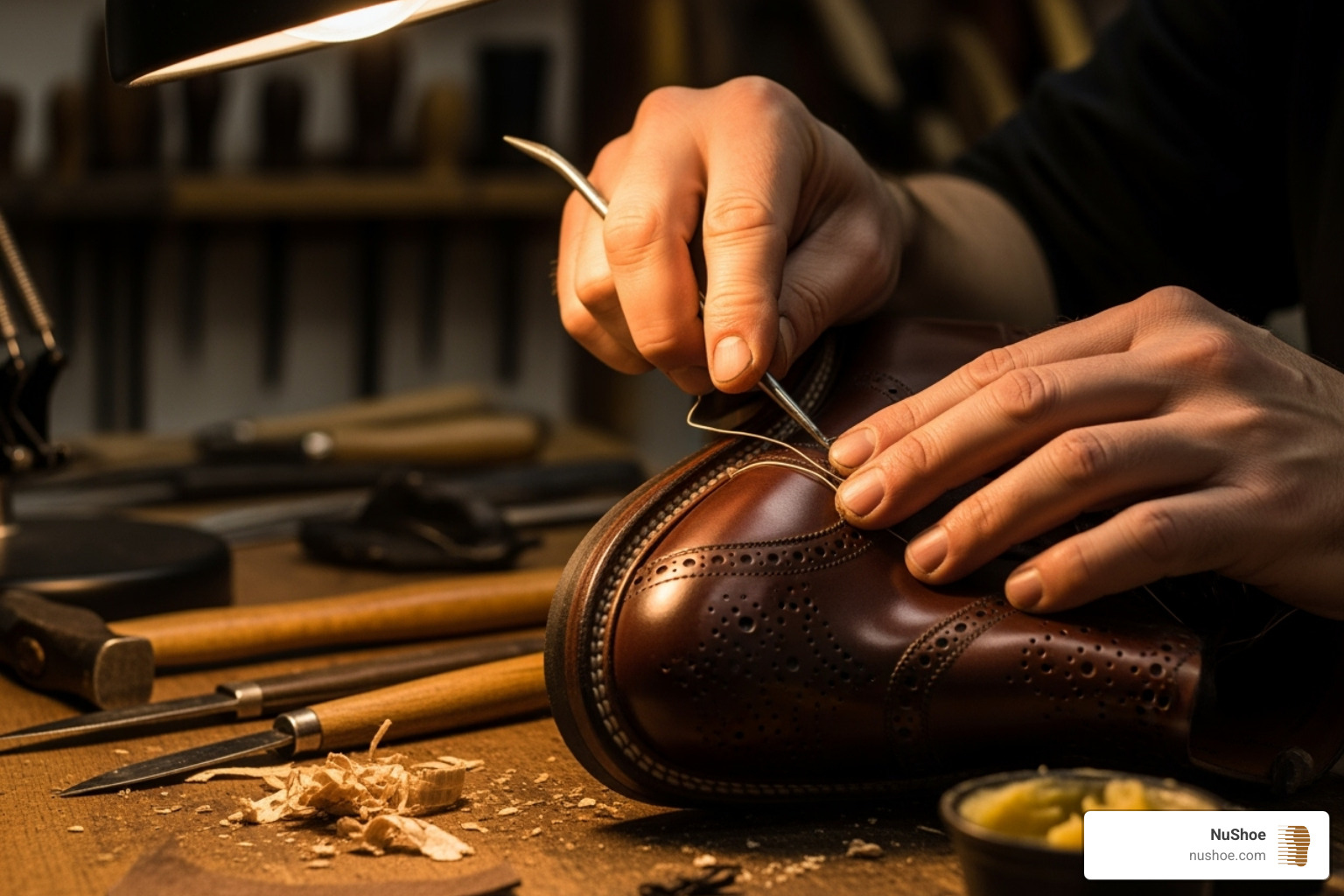
At NuShoe, we specialize in handcrafted shoe renewal, having repaired over 5 million pairs of shoes since 1994. This vast experience means we understand the intricate nuances of every material and construction. When you trust your shoes to us, you’re not just getting a stretch; you’re receiving a precise, customized solution.
We offer custom stretching for specific foot issues like bunions, a high instep (vamp), or general width problems. We use specialized tools and sprays that allow for a controlled and uniform stretch, something that’s hard to achieve at home. Our cobblers understand how different materials, from delicate suedes to robust cowboy boots and high-end designer shoes, will respond to stretching, minimizing any risk of damage. Professional stretching often takes 6-8 hours or longer, allowing the material to slowly adapt and set, ensuring a lasting and truly comfortable fit. For the best results and complete peace of mind, especially for your cherished footwear, trust the experts at NuShoe.
Stretching Different Materials and Special Cases
Now that we’ve covered the core shoe stretching techniques, let’s dig a bit deeper into how various materials behave and address specific fit challenges. You might be surprised at how much difference knowing your material can make!
Effective Shoe Stretching for Leather and Suede
Leather and suede are the superstars of stretchability. They’re natural fibers that are quite forgiving and pliable, especially when given a little encouragement with moisture, heat, or steady pressure. They truly want to mold to your unique foot!
For leather, the thick socks and hairdryer method is a real winner. The gentle heat helps to soften the leather fibers, making them more flexible. Just remember to keep that hairdryer moving to avoid overheating any one spot. After using heat, always apply a high-quality leather conditioner. This keeps your leather soft, supple, and prevents it from becoming stiff or cracking over time.
Suede also stretches beautifully, but it’s more delicate. If you’re using any stretching sprays, always test them on a hidden, inconspicuous area first to ensure there’s no discoloration. For any high-value or delicate suede items, we highly recommend trusting NuShoe’s expertise.
How to Stretch Canvas and Synthetic Shoes
Canvas and synthetic materials can be a different ballgame when it comes to shoe stretching techniques. They often require a bit more thought and a little less force.
While canvas is a natural material, it has less “give” than leather. For canvas sneakers or fabric flats, the freezer method can be quite effective. Another trick for canvas is the rubbing alcohol method: spray the shoes with diluted rubbing alcohol, then wear them until they dry. Always patch test first to check for discoloration.
Synthetic materials like faux leather, vinyl, and polyurethane are notoriously difficult to stretch permanently. Aggressive stretching can lead to permanent damage, like cracking or tearing. If you’re unsure about stretching a synthetic shoe, please consult our experts at NuShoe. We can assess the material and advise on the safest approach.
Advanced Solutions for Bunions, High Arches, and Wide Feet
Sometimes, it’s not just about your shoe being a bit tight all over. Often, it’s about specific pressure points or unique foot shapes that need a little extra room. We’ve helped countless customers find relief for these common issues.
- Bunions: For pressure points like bunions, spot-stretching is key. We use specialized tools with bunion plugs to create extra space exactly where you need it.
- High Instep: If the top of your foot (the instep or vamp) feels painfully squeezed, we can perform instep (vamp) raising to provide that much-needed relief.
- Wide Feet: For an overall wider fit, we use professional-grade stretchers that apply even, consistent pressure for a perfect result.
At NuShoe, we offer custom stretching services for these challenging fits. Our experienced cobblers can identify the precise areas that need adjustment and apply the right shoe stretching techniques to relieve pressure and create comfort.
Know the Risks: When to Call a Professional Cobbler
While DIY shoe stretching techniques can be effective, it’s important to understand the risks, especially with delicate or expensive footwear.
Here at NuShoe, after repairing over 5 million pairs since 1994, we’ve seen it all. The biggest risk you face is overstretching and material damage. Pushing shoes too far, especially delicate fabrics like suede or fine leather, can cause permanent cracking, tearing, or loss of shape.
Another common issue is glue damage. Extreme temperatures from a hairdryer or freezing can weaken the adhesives that hold your shoes together, leading to separated soles or loose linings.
There’s also the risk of color fading or stains. Liquids like water or alcohol can cause discoloration or water spots if not tested on a hidden area first.
Beyond the materials, a shoe’s structural integrity can be compromised. Aggressive stretching can weaken stitching and built-in support, leading to an uncomfortable fit and reducing the shoe’s lifespan.
This is especially true for your expensive shoes or those made with delicate materials. If you’re dealing with a pair that was a significant investment, holds sentimental value, or features intricate embellishments (like high heels or cowboy boots), the risk of DIY damage is simply too high.
When DIY isn’t enough, or if you’re hesitant to try these methods yourself, NuShoe’s repair and stretching services are invaluable. Our expert cobblers are equipped with specialized tools and decades of experience to safely and effectively stretch your footwear, preserving your investment for years to come.
Frequently Asked Questions about Shoe Stretching
We hear a lot of questions about shoe stretching techniques from our customers. Here are the answers to some of the most common ones.
How much can you stretch a shoe?
Generally, you can comfortably stretch a shoe by about a half to a full size. This is usually enough to make a snug shoe comfortable, especially with natural materials like leather. Stretching beyond a full size increases the risk of damaging the shoe’s structure. If you need more room, our professional services at NuShoe can use specialized equipment to achieve the best possible result safely.
How long does it take to stretch shoes?
The time it takes to stretch shoes depends on the method and material.
- Wear-in Method: This is a gradual process over several days.
- Freezer Method: This typically requires leaving the shoes in the freezer overnight.
- Shoe Stretcher: This usually takes 6-8 hours, but may require up to 48 hours for stubborn materials.
- Professional Stretching: We often keep shoes on our specialized equipment for 6-8 hours or longer. This patient approach allows the material to adapt slowly and ensures a lasting, comfortable fit.
Can all shoes be stretched?
Not all shoes are equally stretchable. The material and construction are key factors.
- Best for Stretching: Leather and suede are the most pliable and respond well to stretching.
- Can be Stretched: Canvas and other fabrics can be stretched, but with less dramatic results.
- Difficult to Stretch: Synthetic materials like plastic, vinyl, and faux leather have very little give and can crack or tear if stretched improperly.
The shoe’s construction, such as reinforced toes or heavy stitching, also affects its ability to stretch. If you’re unsure, our experts at NuShoe can assess your footwear and recommend the best course of action.
Conclusion: The Final Step to Lasting Comfort
We hope this guide to shoe stretching techniques empowers you to turn those pinching pairs into comfortable favorites. A simple stretch can save your feet, your wallet, and is an environmentally friendly choice, extending the life of your footwear.
A proper fit is crucial for foot health. By understanding your shoe’s material and choosing the right method, you can often achieve great results at home.
However, for valuable footwear like cowboy boots, high heels, or designer shoes, professional expertise is the safest and most effective option. At NuShoe, our handcrafted shoe renewal services have been trusted for over 30 years. We have the specialized tools and experience to give your shoes the precise, safe stretch they need, helping you keep your favorite footwear in action while reducing waste.
Don’t let tight shoes sit in your closet. Give your footwear the expert care it deserves and let us help you achieve the perfect fit.